Top Dholera Smart City Developments in 2026: Expressway, Airport, Semiconductor and Rail Updates
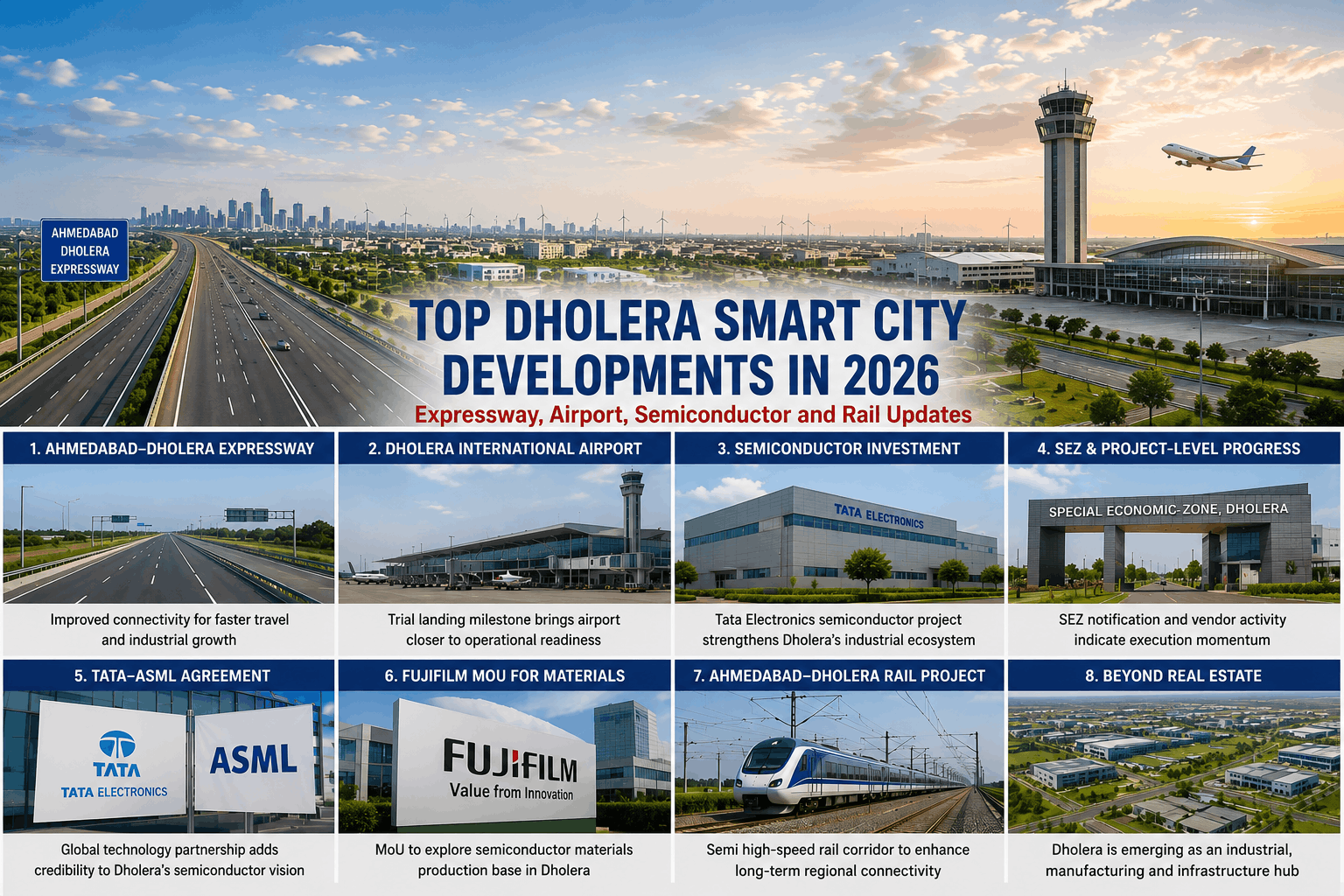
Dholera Smart City has remained one of Gujarat’s most important infrastructure and industrial projects, and 2026 has brought several updates that are shaping its future. Over the past few months, Dholera has seen progress in road connectivity, airport infrastructure, semiconductor investment and rail planning. Together, these developments are helping the region move from a long-term vision toward a more active industrial and manufacturing destination.
From the Ahmedabad–Dholera Expressway and Dholera International Airport to Tata Electronics’ semiconductor project and the proposed rail corridor, 2026 has added fresh momentum to the Dholera story. Some developments are visible on the ground, while others are policy, ecosystem and project-level updates that could influence long-term growth.
Here is a closer look at the top Dholera Smart City developments in 2026 and why they matter.
1) Ahmedabad–Dholera Expressway Has Improved Regional Connectivity
One of the biggest Dholera developments in 2026 is the Ahmedabad–Dholera Expressway. This expressway is a major connectivity project because Dholera’s growth depends heavily on faster access from Ahmedabad and surrounding business centres.
The expressway is expected to reduce travel time and improve road movement for investors, industrial workers, logistics companies and future residents. For a city planned as a major industrial hub, strong road connectivity is essential.
Why this matters
- Faster travel between Ahmedabad and Dholera
- Better transport for industrial cargo and project materials
- Improved access for investors and businesses
- Stronger support for airport and industrial zone connectivity
2) Dholera International Airport Has Moved Closer to Readiness
Another important update in 2026 is the progress of Dholera International Airport. The airport has long been seen as a strategic project because Dholera’s industrial growth will require better passenger and cargo connectivity.
In 2026, the airport drew attention after the AAI aircraft trial landing at Dholera International Airport, which was seen as a sign of progress toward operational readiness.
Why the airport is important
Dholera is being developed as a major industrial and smart city project, not just a residential township. That makes airport connectivity important for:
- business travel
- cargo movement
- semiconductor and electronics supply chains
- investor confidence
- future global connectivity
For high-value sectors like semiconductors and electronics, faster logistics and business travel can make a major difference. That is why the airport is often viewed as a key part of Dholera’s larger industrial ecosystem.
3) Dholera’s Semiconductor Story Has Grown Stronger
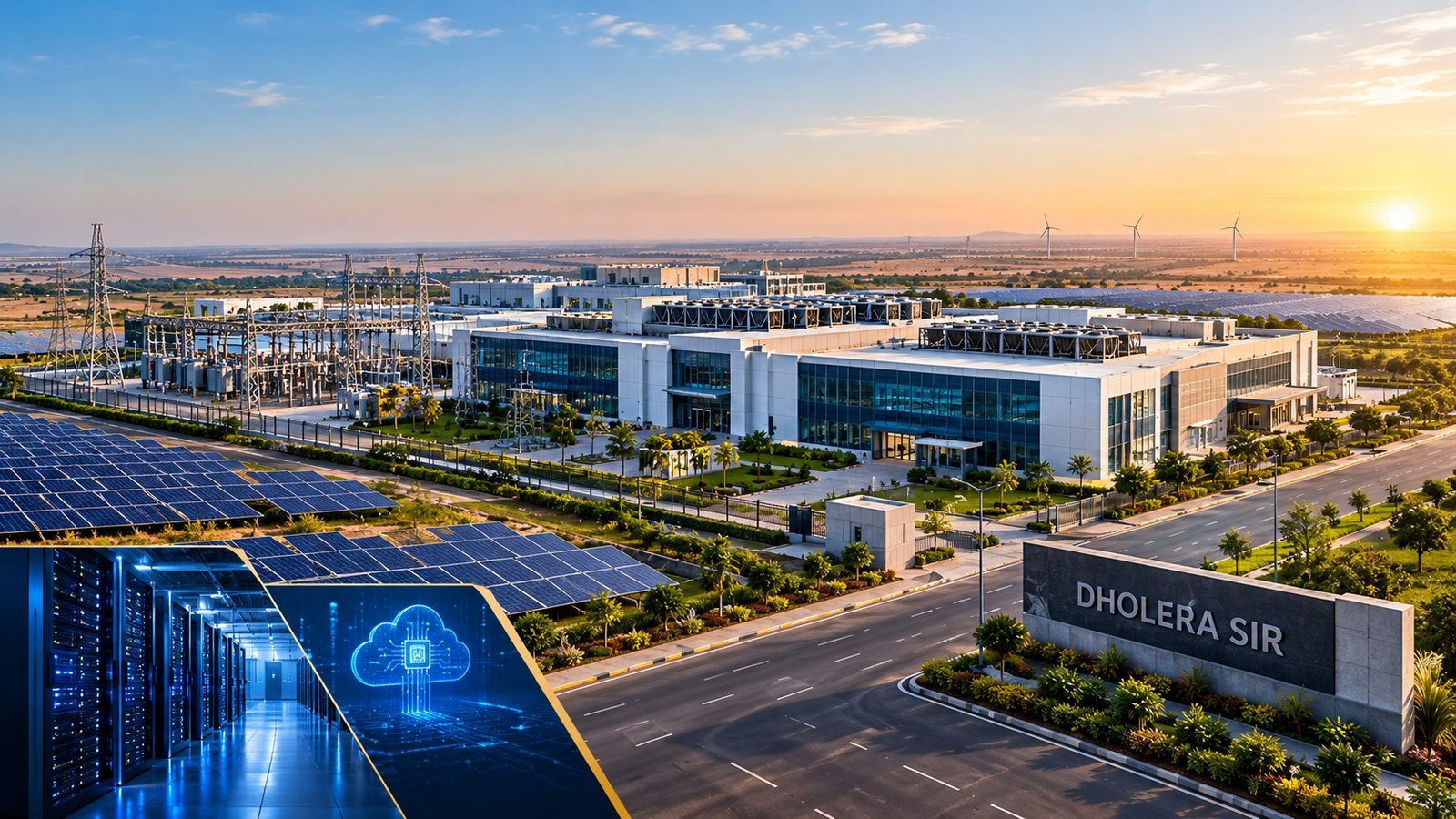
One of the biggest reasons Dholera is in the national spotlight today is its growing role in India’s semiconductor ambitions. The Tata Electronics semiconductor project in Dholera has become one of the region’s most important industrial developments and has significantly changed how Dholera is being viewed.
Dholera is no longer being discussed only as a smart city with roads and industrial land. It is now increasingly seen as a future semiconductor and advanced manufacturing hub.
Why this project matters
Semiconductors are used in smartphones, vehicles, telecom systems, industrial equipment and consumer electronics. India is trying to build stronger domestic chip manufacturing capabilities, and projects like Tata Electronics’ Dholera fab are important in that effort.
For Dholera, the semiconductor project brings:
- national attention
- industrial credibility
- potential supplier ecosystem growth
- long-term employment opportunities
- stronger demand for infrastructure and utilities
4) SEZ and Project-Level Activity Show More Execution
A major sign of progress in any large industrial project is when the story moves from announcements to actual execution. In Dholera’s case, 2026 has brought more project-level movement in the semiconductor ecosystem.
One of the important developments was the Tata Semiconductor SEZ in Dholera, which gave Tata Semiconductor Manufacturing Private Limited a clearer industrial framework for planning, operations, permissions and future expansion.
Project-linked vendor activity and work orders also matter because they suggest the ecosystem is moving closer to on-ground implementation.
Why this matters
This is important because it shows Dholera’s semiconductor story is gradually moving from a proposal-driven phase to a more execution-focused phase.
5) Tata Electronics–ASML Agreement Added Global Technology Importance
Another major 2026 development was the Tata Electronics and ASML agreement for Dholera Fab, which added more global technology importance to Dholera’s semiconductor ecosystem.
ASML is one of the world’s most important semiconductor equipment companies, known for its role in advanced lithography systems used in chip manufacturing. While semiconductor production is highly technical, the larger takeaway is clear: involvement from global technology companies adds credibility to Dholera’s semiconductor ecosystem.
Why this matters
The Tata–ASML agreement is important because it highlights that Dholera’s semiconductor story is not only about investment announcements but also about technology partnerships, equipment support and ecosystem building.
6) Fujifilm’s MoU Added a Semiconductor Materials Angle
Another important development in 2026 is Fujifilm India’s MoU with the Gujarat government to explore a semiconductor materials production base in Dholera.
This is important to describe correctly: it is an MoU and exploration-stage development, not a fully operational facility announcement. Even so, it is a meaningful update because it shows Dholera is attracting interest not just for semiconductor fabrication but also for the materials and supply-chain side of the industry.
Why this matters
A semiconductor hub is not built by one fab alone. It also needs:
- semiconductor materials
- specialty chemicals
- engineering support
- logistics and utility systems
- future downstream and supplier units
Fujifilm’s MoU suggests that Dholera may also play a role in this wider supply-chain ecosystem.
7) Ahmedabad–Dholera Rail Project Adds Long-Term Connectivity Value
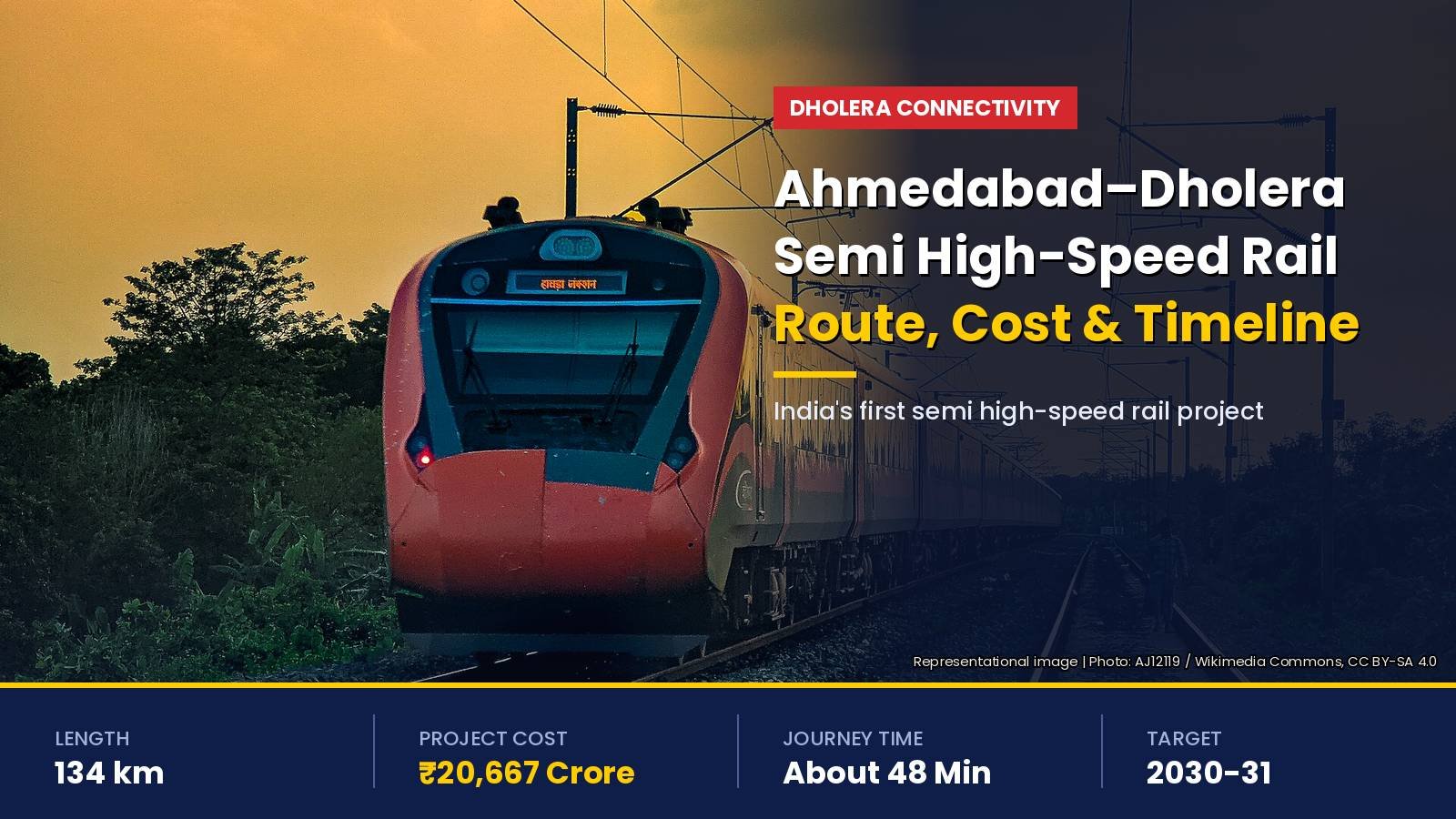
In addition to roads and airport connectivity, rail infrastructure is also important for Dholera’s long-term growth. The Ahmedabad–Dholera rail corridor is another major development linked to the region and is expected to support long-term regional connectivity.
For a large industrial city, multi-mode connectivity is important. Over time, rail can support passenger movement, regional integration and easier access between Dholera and Ahmedabad.
Why the rail project matters
- It adds another connectivity layer to Dholera
- It supports long-term urban and industrial planning
- It can improve access for workers, businesses and future residents
- It strengthens Dholera’s integration with the broader Gujarat economy
8) Dholera Is Becoming More Than a Real Estate Story
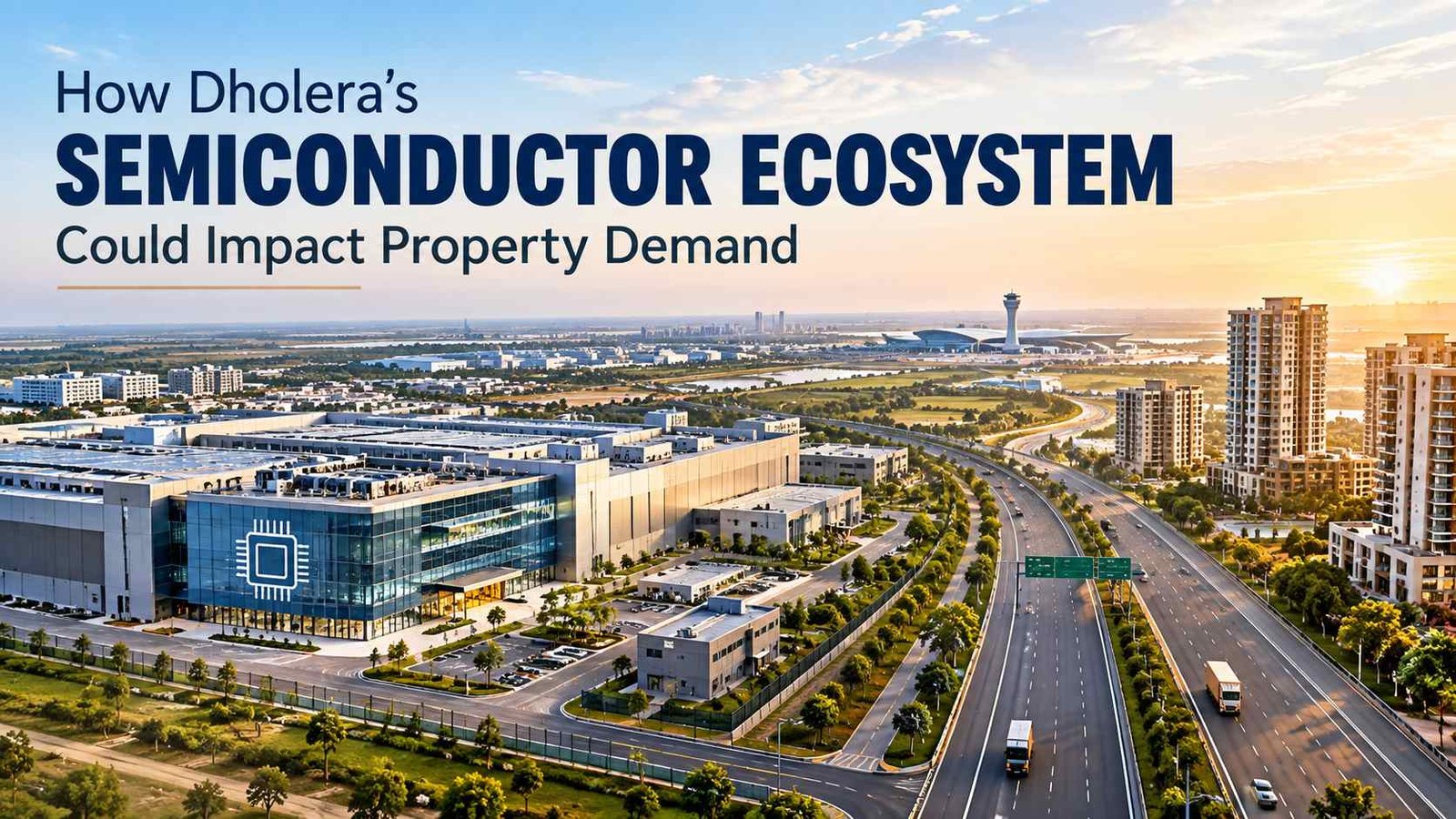
One of the biggest shifts in Dholera’s image is that it is now increasingly being discussed for infrastructure, semiconductors, advanced manufacturing and logistics, not only for land investment.
In earlier years, Dholera was often talked about mainly as a future real estate destination. In 2026, the discussion is broader. Today, Dholera is also being linked with:
- semiconductor manufacturing
- airport and cargo infrastructure
- industrial ecosystem development
- expressway and rail connectivity
- supply-chain investments
- Gujarat’s long-term manufacturing strategy
This does not mean every project is complete or fully operational. But it does show that Dholera is gradually being viewed as an industrial growth zone rather than only a speculative real estate location.
What These 2026 Developments Mean for Dholera
The biggest Dholera developments of 2026 matter because they are connected to one another.
- The expressway improves road access
- The airport strengthens cargo and business connectivity
- The semiconductor project adds industrial depth
- The SEZ and vendor activity suggest execution momentum
- The Tata–ASML agreement brings global technology relevance
- The Fujifilm MoU shows interest in semiconductor materials
- The rail project supports long-term regional integration
When these developments are viewed together, they make Dholera’s growth story stronger. They improve the case for Dholera as a future industrial and smart city hub supported by transport infrastructure, manufacturing investment and ecosystem development.
FAQs
1) What are the top Dholera Smart City developments in 2026?
Major developments include the Ahmedabad–Dholera Expressway, Dholera International Airport progress, Tata Electronics’ semiconductor project, SEZ notification, Tata–ASML agreement, Fujifilm’s MoU and the Ahmedabad–Dholera rail project.
2) Why is the Ahmedabad–Dholera Expressway important?
It improves road connectivity between Ahmedabad and Dholera, helping industrial logistics, business access and long-term development.
3) Why is Dholera important for semiconductor manufacturing?
Dholera is becoming important because of Tata Electronics’ semiconductor project and growing interest in semiconductor ecosystem development, including materials and supply-chain activity.
4) Is Dholera only a real estate story now?
No. Dholera is increasingly being seen as an infrastructure, industrial and advanced manufacturing destination rather than only a land investment location.
5) What role will Dholera Airport play in future growth?
The airport can support cargo movement, business travel, industrial connectivity and long-term investor confidence in the region.
Conclusion
Dholera Smart City has seen several important developments in 2026, and together they show continued progress across connectivity, infrastructure and industry.
The Ahmedabad–Dholera Expressway has strengthened regional road access.
Dholera International Airport has moved closer to operational readiness.
The Tata Electronics semiconductor project continues to keep Dholera in focus nationally.
SEZ and project-level activity have added more execution signals.
The Tata–ASML agreement has brought more global technology relevance.
Fujifilm’s MoU has highlighted Dholera’s semiconductor materials potential.
And the Ahmedabad–Dholera rail project adds long-term connectivity support.
For anyone tracking Dholera Smart City developments in 2026, the key takeaway is clear: Dholera is no longer being discussed only as a future vision. It is increasingly being shaped by infrastructure progress, industrial investment and a growing advanced manufacturing ecosystem.