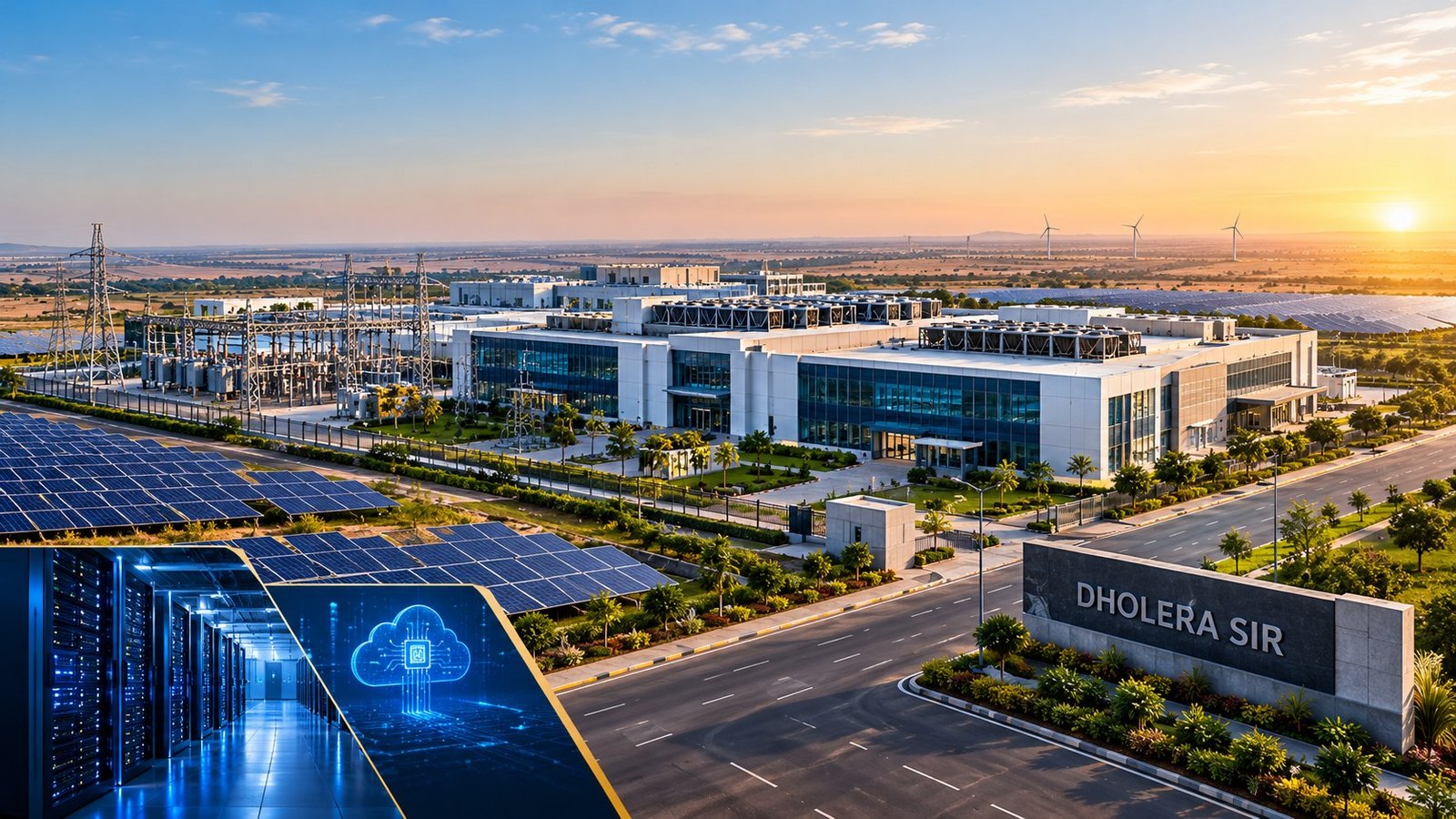

Dholera Semiconductor Ecosystem and Its Impact on Property Demand
The Dholera semiconductor ecosystem is likely to lift demand for housing, rentals and commercial space, but that demand will build in stages rather than all at once. The real driver is people, not just the factory.
In September 2026, Tata Electronics said its Dholera chip plant will have around 450 suppliers and that it is developing a 363-acre vendor park near the facility to house them. Around the same time, a government backgrounder outlined a 200-bed hospital, an IB curriculum school, investor accommodation and other civic projects taking shape alongside the semiconductor cluster.
For buyers, the useful question is not whether Dholera will grow. It is which property types will see demand first, and when.
In Short
- Tata's ₹91,000 crore fab is expected to generate over 20,000 direct and indirect skilled jobs.
- A 363-acre plug-and-play vendor park is planned for around 450 domestic and international suppliers.
- Civic projects are under way, and residential and commercial developments are projected for completion between mid-2027 and the end of 2027.
- Housing demand will likely come in waves, starting with short-stay and furnished homes before family housing picks up.
What the Tata Fab Means for Local Demand
The Tata fab is the anchor of Dholera's growth because it brings large investment, skilled jobs and a long supply chain to one location.
Tata Electronics is building India's first semiconductor fab at Dholera SIR through its subsidiary, with Taiwan's PSMC as technology partner. The project carries an investment of over ₹91,000 crore and a capacity of 50,000 wafer starts per month. Beyond this single fab, Tata's multi-fab vision for Dholera is projected to create over 1,00,000 skilled jobs.
Why does this matter for property? A fab runs round the clock in shifts, so engineers and technicians value a short, reliable commute. That favours homes close to the industrial zone over distant suburbs.
This is why the Dholera semiconductor ecosystem shapes demand more than any single headline. Still, not every job means a new local resident. Some indirect jobs will sit in Ahmedabad or nearby towns, so demand will concentrate where convenience is strongest.
Why the 363-Acre Vendor Park Changes the Picture
The vendor park turns one factory into a cluster, which multiplies the number of companies and people needing space near the fab.
A Tata official explained that the suppliers are a mix of domestic and international firms, and all of them need some presence close to the fab. The park is being developed with a reputed Singapore developer as a plug-and-play facility where international vendors can acquire land. The aim is to cut logistics costs and avoid production delays, a major risk in capital-intensive chip manufacturing
These suppliers handle chemicals, gases, spare parts and maintenance. Each one brings its own staff, visitors and service needs, which can create demand for:
- Industrial and warehousing land for suppliers that need space outside the park
- Furnished rentals for visiting foreign technicians
- Small offices for consultants, logistics firms and service providers
The wider state picture adds weight. Gujarat hosts six of the 12 semiconductor manufacturing projects approved under Semicon India 1.0. pib
Housing Demand Will Arrive in Three Waves
Housing demand will not peak on day one. It will move from short-stay needs to long-term family homes as the fab and its suppliers mature. This timing point is often missed in investment articles, yet it decides which property earns first.
Wave One Brings Construction and Project Teams
During construction and equipment installation, demand comes from contractors, project engineers and installation crews. They need short stays close to the site, not three-bedroom homes. The government reports that a Tent City has been completed, a hotel is under construction, and dedicated investor accommodation was targeted for completion by September-end 2026. This wave favours hospitality and serviced units.
Wave Two Brings Supplier Engineers and Specialists
As suppliers set up, foreign and domestic specialists arrive on rotation. They typically look for furnished 1–2 BHK units with security and food options nearby. In May 2026, Gujarat's Deputy Chief Minister indicated that Dholera would see a significant rise in demand for ready-to-occupy accommodation as industrial activity gains momentum.
Wave Three Brings Families and Long-Term Staff
Once production stabilises, permanent staff bring their families. This wave depends on schools, hospitals and daily conveniences, not just job offers. When these are in place, demand shifts towards apartments, villas and planned residential townships.
Civic Projects Now Taking Shape Around the Fab
Social infrastructure will decide when families actually move, so its progress is worth tracking closely.
The government's September 2026 update gives a clear snapshot of what is being built around the industrial cluster. These are targets, so check the latest status before acting on them.
| Project | Status (Sept 2026 update) | What It Means for Property |
|---|---|---|
| 200-bed hospital | Under construction, target December 2026 | Makes long-term family living practical |
| IB curriculum school | Building ready, target around October 2026 | Key trigger for staff relocating with children |
| Investor accommodation | Target September-end 2026 | Early signal of short-stay demand |
| Residential and commercial projects | Completion projected mid-2027 to end-2027 | First supply of ready homes and shops |
Other basics are also in place. A fire station has been completed, and a food court opened in July 2026.
For homebuyers, the hospital and school matter most. Together they mark the point where the Dholera semiconductor ecosystem starts supporting family life rather than only work trips.
Commercial Property and Connectivity Signals to Watch
Commercial demand usually follows residents, while connectivity decides how widely that demand spreads.
The 109 km Ahmedabad–Dholera Expressway was inaugurated by the Prime Minister on 31 March 2026. Meanwhile, Dholera International Airport remains under construction. The airport matters most for foreign suppliers and executives who travel often.
Here is a point many buyers overlook. The expressway cuts both ways. It makes Dholera easier to reach, but it also lets some staff live in Ahmedabad and commute. Housing inside Dholera must therefore compete on convenience, safety and amenities, not just price.
On the commercial side, early winners are usually everyday formats:
- Retail and eateries near residential clusters
- Clinics and pharmacies serving staff and families
- Service offices for supplier support and consultancy
Commercial units work only where real footfall exists. A shop in an empty sector can stay vacant for years.
Common Mistakes Buyers Make With the Dholera Semiconductor Ecosystem
The biggest mistake is treating every announcement as instant demand. Sound decisions come from matching property type to the right timeline.
- Ignoring production timelines. At the time of approval, the IT minister noted that a typical semiconductor fab takes three to four years to reach production. Demand builds around that schedule.
- Assuming every job means a local tenant. Indirect jobs may spread across the region.
- Buying a plot and expecting rent. Land offers potential appreciation, while rental income needs a constructed, usable home.
- Trusting distance claims. Check the actual road distance to the fab and vendor park yourself.
- Skipping document checks. Verify title, zoning and town planning scheme status before paying.
Patience and verification protect you far more than speed.
Frequently Asked Questions
How many jobs will the Dholera semiconductor fab create?
The Tata fab is expected to create over 20,000 direct and indirect skilled jobs, with Tata's wider multi-fab plan projecting over 1,00,000.
What is the Tata vendor park in Dholera?
It is a planned 363-acre plug-and-play park near the Tata fab, meant to house around 450 domestic and international suppliers.
Will rental demand in Dholera rise because of the fab?
Rental demand is likely to rise gradually, starting with short-stay and furnished homes before family housing grows after schools and hospitals open.
When will residential projects near the fab be ready?
Government updates project completion of residential and commercial developments in the township between mid-2027 and the end of 2027.
Conclusion
The Dholera semiconductor ecosystem is creating real demand, but it will grow in waves linked to construction, suppliers and families. Buyers who match property type to that timeline will be better placed than those chasing headlines. Voice of Dholera will keep tracking these updates so you can decide with verified facts.