Dholera Plot Verification: What to Check Before You Pay a Single Rupee
Most people who lose money on Dholera land don't lose it because Dholera failed. They lose it because the plot they bought was never part of the Dholera that is actually being built.
The gap usually starts small. A brochure says "Dholera Smart City", a dealer shares a WhatsApp photo of the expressway, and a token amount gets paid before anyone checks a single government record. By the time the buyer asks for documents, the money has already moved.
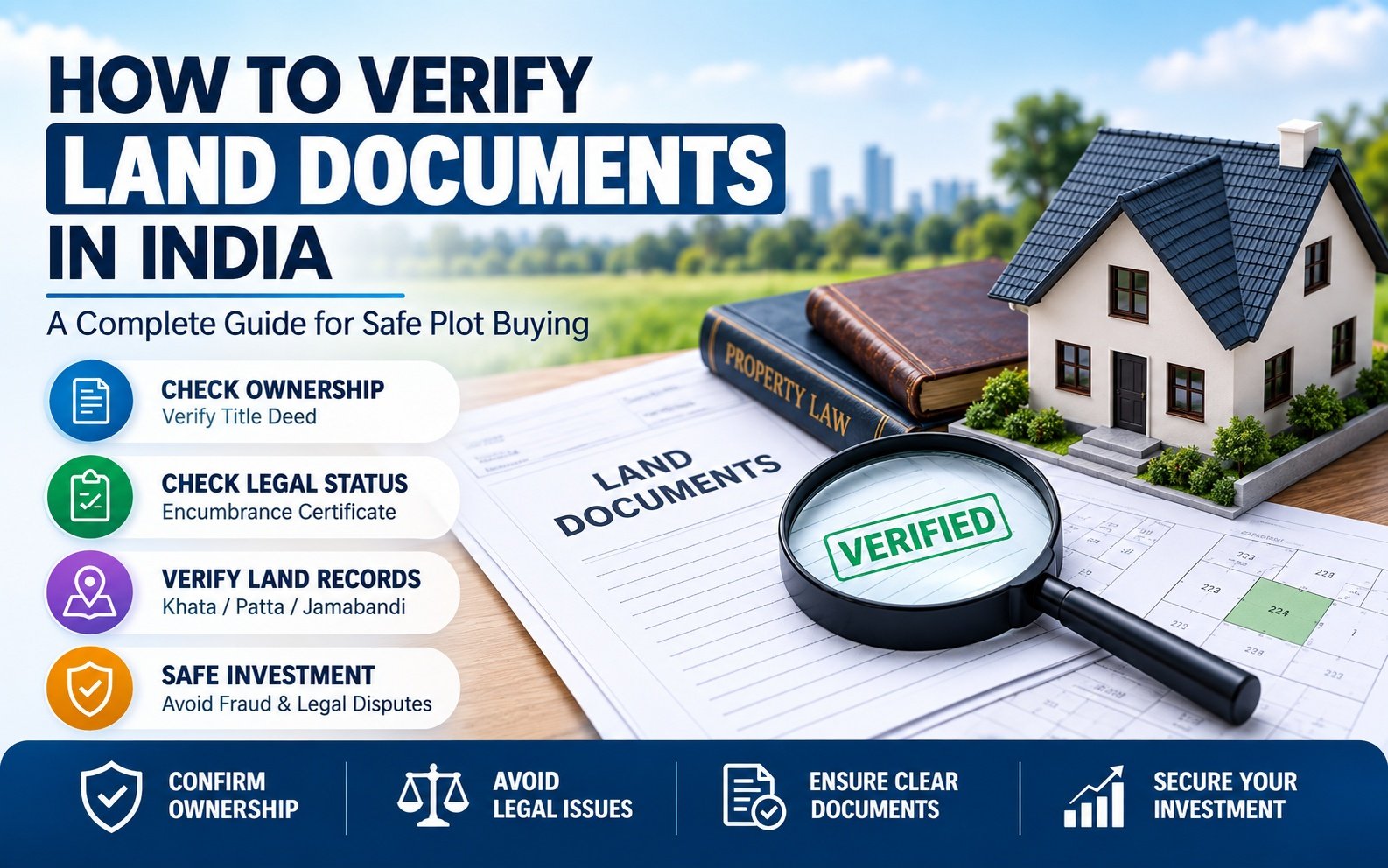
This guide covers the checks that matter in Dholera plot verification, in the order you should do them, and the warning signs that should stop a deal before you pay.
Why Verification Matters More in Dholera
Dholera's name is used far beyond its official boundary. The Dholera Special Investment Region covers about 920 sq km, but development rights apply mainly within six sanctioned Town Planning (TP) schemes covering roughly 422 sq km. Land outside those schemes can still be advertised with "Dholera" in the name.
The cost of skipping checks is real. In the Nexa Evergreen case, investors were promised Dholera plots or high weekly returns. The Enforcement Directorate is investigating alleged fraud of about ₹2,676 crore, searched more than 20 locations in June 2025, and arrested a key accused in August 2026.
The lesson is not to avoid Dholera. It is to verify the specific plot, not the city's reputation.
Start With the Question Sellers Often Avoid: Which TP Scheme?
Before discussing price, ask for the exact TP scheme and final plot number. If the seller can only say "near the expressway" or "5 minutes from the activation area", that is the first gap to close.
A TP scheme is a land pooling and readjustment process under Gujarat's Town Planning and Urban Development Act, 1976. The government takes original land parcels, sets aside land for roads and utilities, and returns reshaped plots to owners. Land inside a sanctioned scheme gets planned infrastructure. Land outside it does not.
The test is not whether a plot is "in Dholera". It is whether the plot appears in a sanctioned TP scheme with a specific final plot number.
Read the 7/12 Extract Yourself
The 7/12 extract is the basic land record in Gujarat. It shows the owner's name, the survey number, the land area and any recorded rights or liabilities.
Don't rely on a photo or PDF sent by the seller. Download the record yourself from the Gujarat government's AnyROR land records portal and check that:
- The owner's name matches the person or company selling to you.
- The survey number and area match the sale documents.
- No loan charges, court orders or disputes are recorded.
If the names don't match, ask how the seller holds rights to the land. A power of attorney or an unregistered agreement is very different from ownership.
Match the Survey Number to the Final Plot Number
This is where many buyers get confused. A TP scheme reorganises land, so the original survey number on the 7/12 extract is given a new final plot (FP) number, often with a changed shape and size.
Ask for the reconstitution record that links the original survey number to the final plot number. Then confirm on the official TP scheme map where that final plot actually sits.
A plot can have a genuine 7/12 record and still be in a different place, or of a different size, from what the brochure shows. The final plot number decides where your land will be once the scheme is implemented.
Confirm the NA Order and the Zone
Agricultural land cannot simply be used to build a house or a shop. It needs a Non-Agricultural (NA) order from the Collector, which permits non-farm use.
Within Dholera SIR, you also need to know which zone your final plot falls in: residential, commercial, industrial or another use. DSIRDA, the Dholera Special Investment Region Development Authority, controls zoning and layout approvals. For a plotted project, check that the developer's layout has DSIRDA approval.
Ask for copies of the NA order and the DSIRDA approval. Check that the survey number and final plot number on both match your plot.
Check RERA Status Instead of Taking the Seller's Word
Under the Real Estate (Regulation and Development) Act, 2016, projects larger than 500 sq m or with more than 8 units, including plotted developments, must generally be registered with the state RERA before they are advertised or sold.
Some sellers say plot-only schemes in Dholera don't need RERA. Don't settle this on a phone call. Search the project or promoter name on the official GujRERA portal. If it isn't registered, ask a property lawyer whether it needed to be before you pay anything.
RERA registration also brings buyer protections. Under the Act, the promoter of a registered project cannot take more than 10% of the price as an advance before a registered agreement for sale is signed.
Treat "Guaranteed Returns" as a Warning
Land does not come with guaranteed returns. When a plot offer includes fixed weekly or monthly payouts, a promise to double your money within a set period, or rewards for bringing in other buyers, it is behaving like an investment scheme, not a land sale.
Those were among the features reported in the Nexa Evergreen case. Genuine sellers talk about documents, approvals and location. Schemes talk about returns and referrals.
Two more checks protect your payment:
- Pay only through traceable bank transfers, and only to the name on the ownership and sale documents.
- Get an encumbrance certificate from the Sub-Registrar's office, covering several decades, to see whether the land has been mortgaged or sold before.
A Quick Comparison: Weak Signal vs. Strong Signal
| What to Check | Weak Signal | Strong Signal |
|---|---|---|
| Location | "Near Dholera" or "near the expressway" | Named TP scheme and final plot number |
| Land record | Screenshot of a 7/12 sent by the seller | 7/12 downloaded yourself from AnyROR |
| Ownership | Power of attorney or unregistered agreement | Owner's name on the 7/12 matches the seller |
| Land use | "NA is in process" | NA order issued by the Collector |
| Planning approval | Brochure layout only | DSIRDA-approved layout and zone confirmed |
| RERA | "Not needed for plots" | Registration verified on the GujRERA portal |
| Returns | Fixed payouts or referral rewards | No return promises; price based on location and approvals |
| Payment | Cash or third-party accounts | Bank transfer to the documented owner |
If a deal shows mostly weak signals, that is a clearer reason to walk away than any single missing document.
Frequently Asked Questions
Is it safe to buy a plot in Dholera?
It depends on the plot, not on Dholera as a whole. A plot inside a sanctioned TP scheme, with clean records and approvals, carries far less risk.
How do I know whether a plot is inside a TP scheme?
Ask for the TP scheme name and final plot number, then confirm the plot's location on the official TP scheme map.
Can I check Dholera land records online?
Yes. The 7/12 extract is available on the AnyROR portal. For the NA order and DSIRDA approval, ask the seller for copies.
Is RERA registration required for plots in Dholera?
Plotted projects above 500 sq m or with more than 8 plots generally need it. Verify on the GujRERA portal before paying.
Conclusion
Dholera plot verification comes down to one question does the paperwork prove the plot is where the seller says it is, with the rights the seller claims? These checks take a few days, and they can prevent a loss that takes years to recover from. For dated, source-checked updates on TP schemes, infrastructure and investment news, follow Voice of Dholera's latest Dholera news coverage.